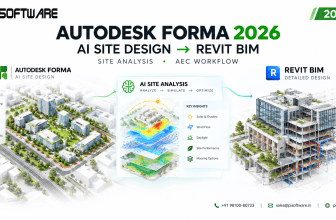
Future of CAD in Architecture: How AI and Automation Are Changing Design

The field of architecture is advancing at an unparalleled pace. In the past, architects had to rely on pens, pencils, and endless hours to design buildings. Today, however, all of that has gone digital. The development of Computer-Aided Design (CAD) technology has led to quicker and more efficient design processes.
With the advancement of AI technologies and automation, the concept of CAD goes far beyond drawing plans. CAD today can be thought of as an intelligent assistant for architects, who help improve design processes and minimize mistakes.
From Traditional Drawing to Smart CAD
The designing of the building’s layout was an intense activity that required much effort from the designers who had to make various drawings manually. Nevertheless, once CAD software was invented, the designing process became much easier.
By using such programs, it was easy and quick to make drawings of high quality. This way, CAD software made it possible to become more accurate at drawing layouts while saving much time. Nowadays, however, CAD software has evolved even further. No longer is CAD software limited to simply creating various designs with its help.
With its help, it becomes possible to recognize certain patterns within design, to give suggestions to users regarding improvements of the design and to complete some tasks automatically.
Professional architects who wish to improve their software often take a look at the AutoCAD price in India to see what they need. Modern versions of AutoCAD include more features and capabilities than the older ones.
The Role of AI in Modern CAD
Artificial Intelligence is one of the biggest reasons behind the transformation of CAD software. AI adds intelligence to design tools, making them more powerful and efficient.One of the most useful features is generative design. In this process, architects can enter their requirements such as space, budget, materials, and environmental conditions. The software then generates multiple design options automatically. This saves a huge amount of time and gives better ideas.
AI also helps in decision-making. It can analyze data like sunlight, airflow, and energy usage to create more sustainable designs. This is very useful in today’s world where eco-friendly buildings are becoming important.
Another major benefit is error detection. AI can identify design mistakes early in the process, which helps avoid costly corrections later during construction.
AI is also making CAD easier to use. With voice commands and simple inputs, architects can interact with the software more naturally. Instead of clicking through multiple options, they can simply type or speak their requirements.
How Automation Improves Workflow
Automation is another important part of modern CAD systems. While AI adds intelligence, automation improves speed and efficiency.
Earlier, tasks like dimensioning, labeling, and documentation had to be done manually. These tasks were time-consuming and repetitive. Now, automation handles them quickly and accurately.
For example, CAD software can automatically generate construction drawings, saving hours of work. It also ensures consistency across the project, which reduces errors.
Automation also improves collaboration. With cloud-based systems, multiple team members can work on the same project from different locations. Everyone gets access to the latest updates, which reduces confusion and delays.
Because of these advantages, many professionals prefer to buy autodesk products that offer built-in automation and advanced design tools. These tools help teams work faster and deliver better results.
Benefits of AI and Automation in CAD
The combination of AI and automation brings several benefits to architects and designers:
1. More Creativity
When repetitive tasks are handled automatically, architects get more time to focus on creative ideas. They can experiment with different designs and improve overall quality.
2. Better Accuracy
AI helps reduce human errors by checking designs and suggesting improvements. This ensures that the final output is precise and reliable.
3. Faster Project Completion
Automation speeds up the entire design process. Tasks that used to take days can now be completed in hours.
4. Cost Efficiency
By reducing errors and saving time, AI and automation help lower overall project costs.
5. Sustainable Design
AI can analyze environmental factors and suggest eco-friendly solutions, helping architects create sustainable buildings.
Today, many businesses and professionals prefer to Buy AutoCAD LT Software because it is quick, convenient, and gives access to the latest tools without delay.
Integration with Modern Technologies
CAD is not an isolated system anymore; CAD has been linked to other systems such as Building Information Modelling (BIM), Augmented Reality (AR) and Virtual Reality (VR). CAD integrated with BIM gives the architect the ability to handle the whole process of designing, constructing and maintaining a project. AR and VR provide the client with the experience of the building design even before the start of construction. They make it possible for a person to walk through the virtual model of the building and get acquainted with it.
What the Future Holds
The future for CAD technology within architecture appears to be bright. Over the next few years, there will be plenty of improvements and developments in terms of new features and functionalities.
Among those is the possibility of the implementation of an intelligent virtual assistant that would offer architects various suggestions and solutions on the spot. Optimization of design according to collected data is another development to expect.
Robotics could potentially assist in construction as well by means of creating a direct link between the designed object with CAD and the actual machinery building it.
Finally, the idea of creating digital twins, which would be up-to-date copies of a real building, might be put into practice.
Conclusion
The use of CAD software has evolved from mere drawing aids to smart design software that uses AI and automation technologies. This software has the potential to change how architects practice their profession.
The development and integration of CAD into the practice of architecture does not mean the end of architects’ jobs. Rather, it means that architects can be more efficient and creative with their time by letting the computer handle the mundane tasks.
With the continued development of technology, an architect who integrates CAD technology into his or her practice is likely to stay relevant in the profession.
FAQs
1. What is CAD software in architecture?
CAD software is a digital tool used by architects to create accurate 2D drawings and 3D models of buildings.
2. How does AI helpinCAD?
AI helps automate tasks, suggest design improvements, detect errors, and analyze data for better decisions.
3. Why is automation important in CAD?
Automation saves time by handling repetitive tasks and improves accuracy in design work.
4. Should I upgrade to modern CAD software?
Yes, modern CAD tools offer better features, faster performance, and improved design capabilities.
5. Is buying CAD software online a good option?
Yes, it is convenient, quick, and gives access to the latest versions and updates easily.